On foraging, folklore, seasonal living and everything in between
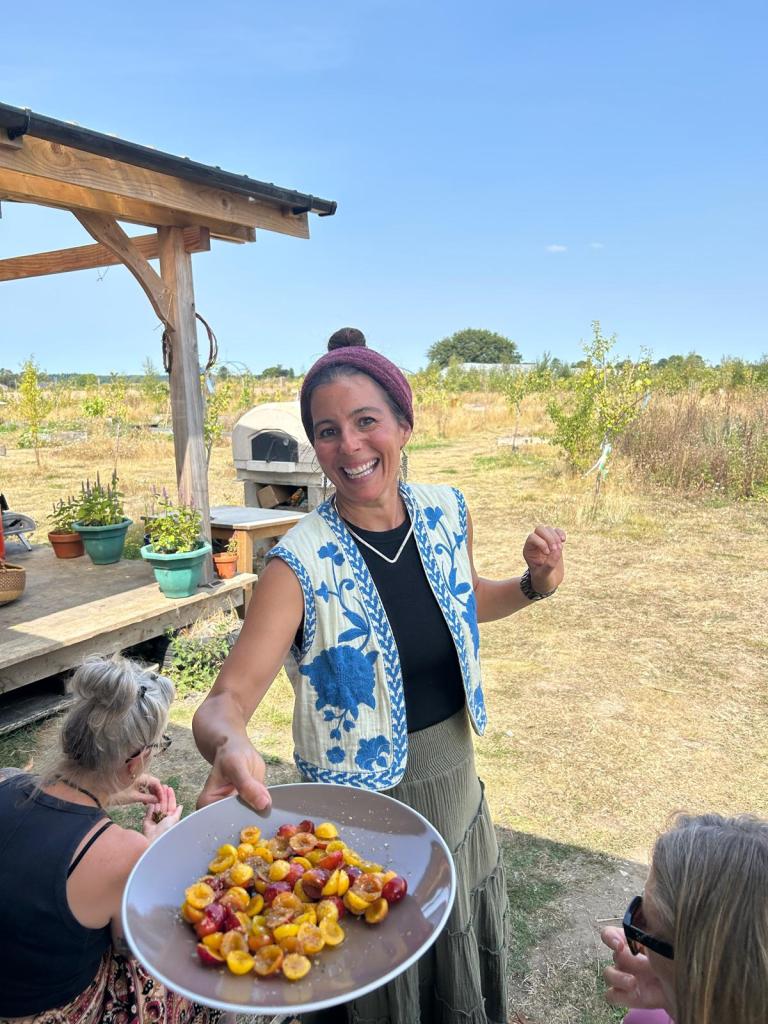
Sammie Longhorn, known as The Hedgerow Yogi, is a forager, herb crafter and folklorist whose work centres on helping people reconnect with the abundance of the natural world. Through seasonal foraging walks, workshops and immersive gatherings, she guides others back to the plants that grow all around us, and the stories and traditions that once helped us understand the quiet magic woven through the natural world.
I first met Sammie on a sunny morning at Lime Wood Hotel in the New Forest, where a small group of us had gathered for a ‘Forage and Ferment’ workshop. Within minutes of stepping into the meadows and woods, Sammie was pointing out plants I’d walked past a hundred times without noticing – leaves for salads, flowers for syrups, roots with ancient medicinal uses. But what struck me most wasn’t just her depth of knowledge. It was the way she spoke about the plants, weaving together folklore, memory and meaning so naturally that the whole experience felt less like a lesson and more like a gentle reintroduction to a world I’d forgotten how to see.
I left that afternoon wanting to understand more – not only about what Sammie does, but why she does it and why she believes it matters so deeply, especially in our fast-paced, increasingly digital world. So, I sat down with her to chat about everything from herb craft and seasonal living to folklore, mythology and our evolving relationship with the land.
How it all began
Sammie’s relationship with plants began long before it became her life’s work. As a child, she made potions from rose petals in her grandmother’s garden and foraged for berries and chestnuts with her grandad, forming an early and instinctive bond with the natural world. Years later, when she and her husband opened a pub together, that connection resurfaced in a practical way as they foraged ingredients for the menu. But over time, what began as culinary curiosity deepened into something more holistic – a fascination with the magic, medicine and mythology of wild plants that would shape the path she walks today.
Plants as more than ingredients
For Sammie, plants are far more than ingredients or remedies. While her early foraging focused on the kitchen, her relationship with the plant world gradually shifted into something more personal and perceptive. The more time she spent harvesting wild food and medicine, the more she began to experience plants not simply as resources, but as “unique and individual beings in their own right”, with their own distinct character and energy.
She describes this change not as a sudden turning point, but as a gradual, yet essential, awakening – a growing awareness that plants offer healing “far beyond their mere chemical constituents.” And, as a result, she explains that she began to work with plants on a more “subtle level”.
This has led her into practices such as creating plant spirit essences and exploring forms of intuitive plant communication. Plant spirt work, Sammie explains, is “less about mysticism for its own sake and more about relationship.” Plant spirit essence is created not through physical extraction like a tincture or tea, but through time, presence and intention, sitting with a plant, observing it closely, and working with its energetic qualities rather than its chemical ones. While these ideas may feel unfamiliar to some, Sammie approaches them with the same grounded reverence she brings to her foraging work: through observation, patience and relationship. For her, it is simply another way of listening and valuing a plant’s presence.
Rather than separating the physical from the spiritual, Sammie sees plant work as a spectrum – from the practical act of making a wild pesto to the quieter act of learning the deeper qualities of an individual plant. Both, she believes, are ways of building relationship with the natural world, something she feels many of us are quietly longing to rediscover.
Sammie also highlights her awareness that this more intuitive side of her work can sometimes be misunderstood. Recently, in discussions with fellow members of The Association of Foragers, questions arose about whether talking about plants in such human terms risks anthropomorphising them. Sammie is clear that her work is always grounded in a strong scientific understanding of plant identification, properties and safety. For her, folklore, spirituality and science are not in opposition – they are complementary ways of relating to the same living world. Story and symbolism, she believes, help people form emotional connections that make knowledge memorable, meaningful and inclusive.
Learning from the old ways
Much of Sammie’s understanding of plants has been shaped not only by her own experience, but also through learning passed on by others. She speaks warmly of her mentor Dee Dade, with whom she has studied magical native plants and the rhythms of the Wheel of the Year.
“It’s such a gift to have a teacher you can learn from directly,” Sammie says. While she appreciates the accessibility of modern online learning, she believes there is “no substitute for direct hands-on experience”, that passing knowledge from person-to-person is a powerful method that reminds us of generations before us.
This idea of lineage runs through all her work. In evolutionary terms, she reminds me, humans have been reading and writing for only a tiny fraction of our history. For most of our time on earth, knowledge about which plants would nourish or heal us, and which might harm us, “would have been absolutely essential to survival” – and such important knowledge would have been passed on through story, folklore and lived experience.
“Our brains are wired to absorb and remember stories,” Sammie explains. Folklore, in this sense, is not whimsical or decorative. It is practical, memorable and deeply human. On her walks, she often shares tales connected to the plants around her – stories that help anchor information in imagination and emotion, making it more likely to stay with people long after the day is done.
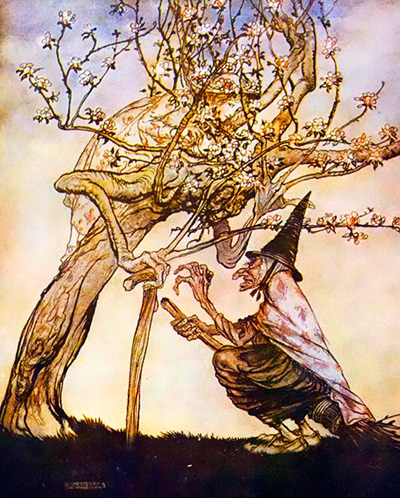
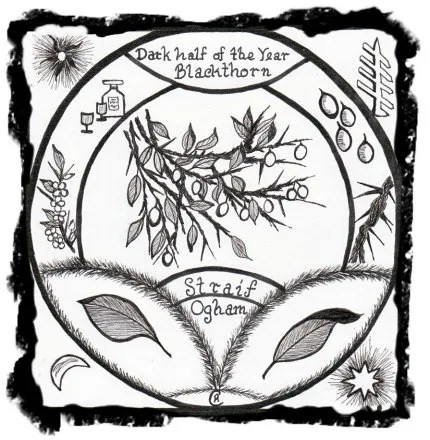
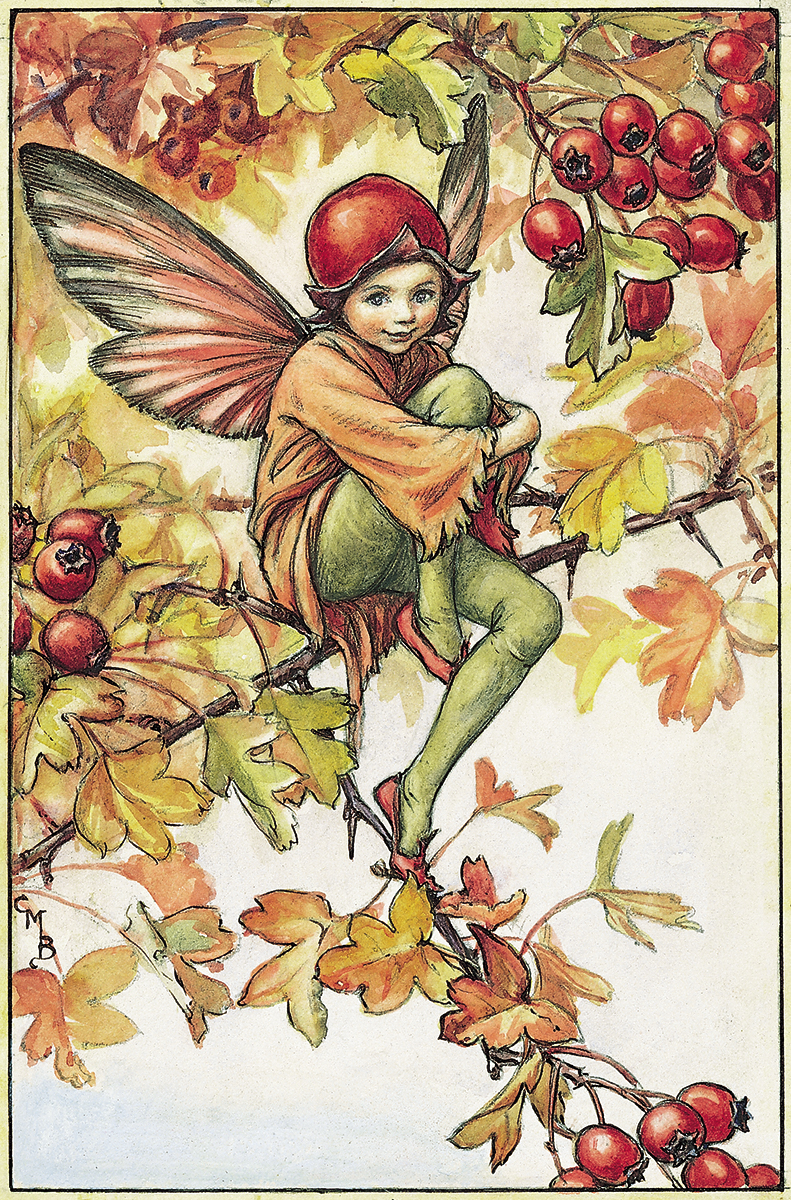
Sammie often illustrates this connection between story and science through plants whose folklore still echoes their practical properties today. Elder, long known as “devils’ wood” and surrounded by warnings not to cut it down, contains toxic compounds in its raw berries, bark and leaves – a powerful reason for caution disguised as myth. Blackthorn, associated in Celtic lore with curses and misfortunes, is infamous among foragers causing septic wounds if its thorns pierce the skin. And hawthorn, a tree of fertility, death and the fairy realm, carries the scent of decay in its blossoms while also being scientifically recognised as a powerful tonic for the heart. These powerful examples remind us that these stories are not simply superstition, but sophisticated memory tools that helped communities survive.
In weaving botany, mythology and memory, Sammie is not trying to recreate the past. Instead, she is offering a bridge – a way for modern people to reconnect with the knowledge and rhythms that once shaped everyday life.
Seasonal rhythm and everyday practice
If there is one thread that ties the myriad of Sammie’s work together, it is her deep trust in the seasons.
“Every event or foraging walk that I perform is dictated wholly by the seasons. No foraging walk is the same, as what is seasonally abundant will always form centre stage,” she explains. The beauty of living seasonally is that each time of year brings its own gifts to look forward to and appreciate when they arrive. Sammie reminds us that, “Mother nature knows what kind of seasonal medicine we need at any given time of the year,” that spring greens arrive just as we crave freshness and renewal, whilst autumn hedgerows offer berries rich in nutrients as the colder months approach.
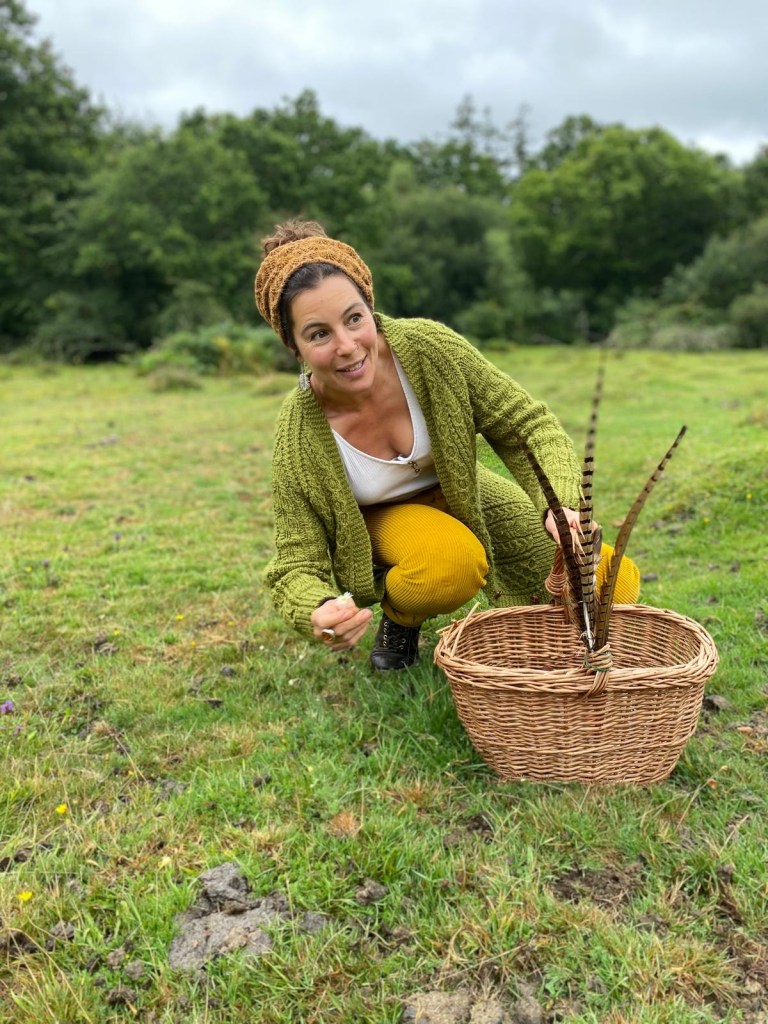
This seasonal awareness extends into her own daily life. Whether it’s adding wild herbs to a meal, taking a homemade tincture or brewing a cup of wild tea, she tries to connect with plants in small, consistent ways.
Sammie explored this seasonal relationship to food in its most immersive form during her Wildbiome experience, where she lived entirely from wild and foraged foods for three months between April and June 2025. The experience was, she says, “deeply moving and emotional and undoubtedly not without its challenges.” Some days and weeks brought a rush of energy and clarity; others highlighted just how dependent she was on seasonal abundance, weather and time.
One of her biggest takeaways was the delicate balance between ancient ways of living and the realities of modern life. “I didn’t always have a whole day to go out foraging,” she explains, reflecting on the tension between traditional foodways and contemporary schedules. The experience also gave her a profound emotional connection to her food – the hours spent harvesting, processing and preserving each ingredient made any waste feel deeply personal. She now encourages anyone considering something similar to do so in community, where shared effort and support make the journey more sustainable.
While her Wildbiome was an intense and all-consuming experiment, it ultimately reaffirmed what she already believed: that even small, regular acts of connection with nature can have a powerful impact.
She is realistic, though, about the demands of modern life. Sammie recognises and understands not everyone can spend hours foraging or live entirely from the land. But she urges to “allow our wild edges back in a little, by spending a few moments in nature each day, harvesting one or two of the wild plants in season, observing local wildlife, and noticing the turning of the seasons.” It is through these simple, practical ways that we can begin to rebuild a sense of connection – and return to the “old ways.”
For Sammie, seasonal living is not about perfection or escape. It is about remembering that we are part of a wider living system and allowing that awareness to gently guide how we move through the year. She believes that through this way of life, we can find the “antidote” to the pressures and disconnection of modern life.
Community, gatherings and shared ritual
While Sammie’s work often begins with individual connection, one person noticing one plant, it often provides a natural springboard to wider community connection. Community sits at the heart of everything she does, from her foraging walks and workshops to seasonal gatherings and rituals. For Sammie, they are as much about imparting knowledge as they are about bringing people together in shared experience.
She speaks often about the simple power of being outdoors with others, learning collectively and rediscovering a sense of belonging to the land. Her collaborations with community spaces such as Four Acre Farm, a “no-dig community supported agriculture market garden, mixed-fruit orchard and habitat creation project in Ringwood, New Forest,” reflect this same ethos. Sammie tells me about her excitement when Four Acre Farm set up close to her home, and how she immediately took her family there to volunteer. “It’s been a joy to see the place flourish over the years into a haven for wildlife and a place for magical gatherings.”
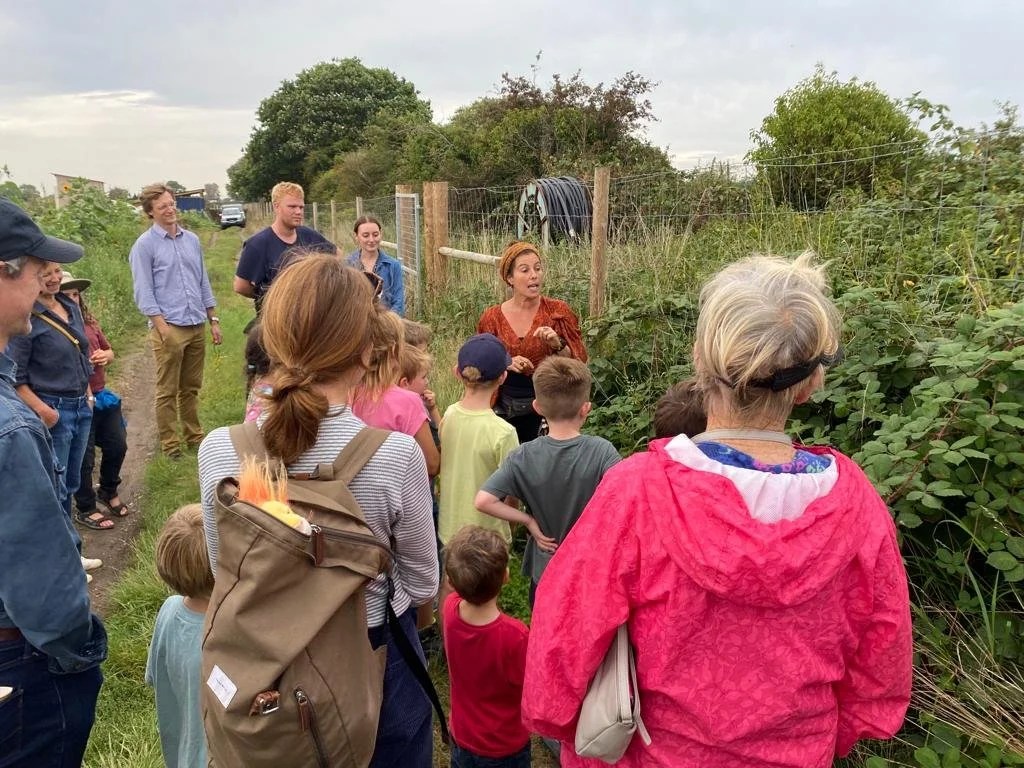
One of Sammie’s favourite collaborations at the farm is The Magic of Culinary Herbs, a course that blends practical herb use with a deeper exploration of the energetic qualities of plants – a natural extension of her interest in plant spirit communication. Here, the spiritual and the practical sit comfortably side by side, rooted in soil, flavour and lived experience rather than performance.
At the farm, the focus shifts slightly from learning about nature to gathering with it, marking the turning points of the year through fire circles, song and storytelling. A powerful example of this are the Wheel of the Year events, a cycle of eight seasonal celebrations that follow the rhythm of the land, marking the solstices, equinoxes and the quieter thresholds in between.
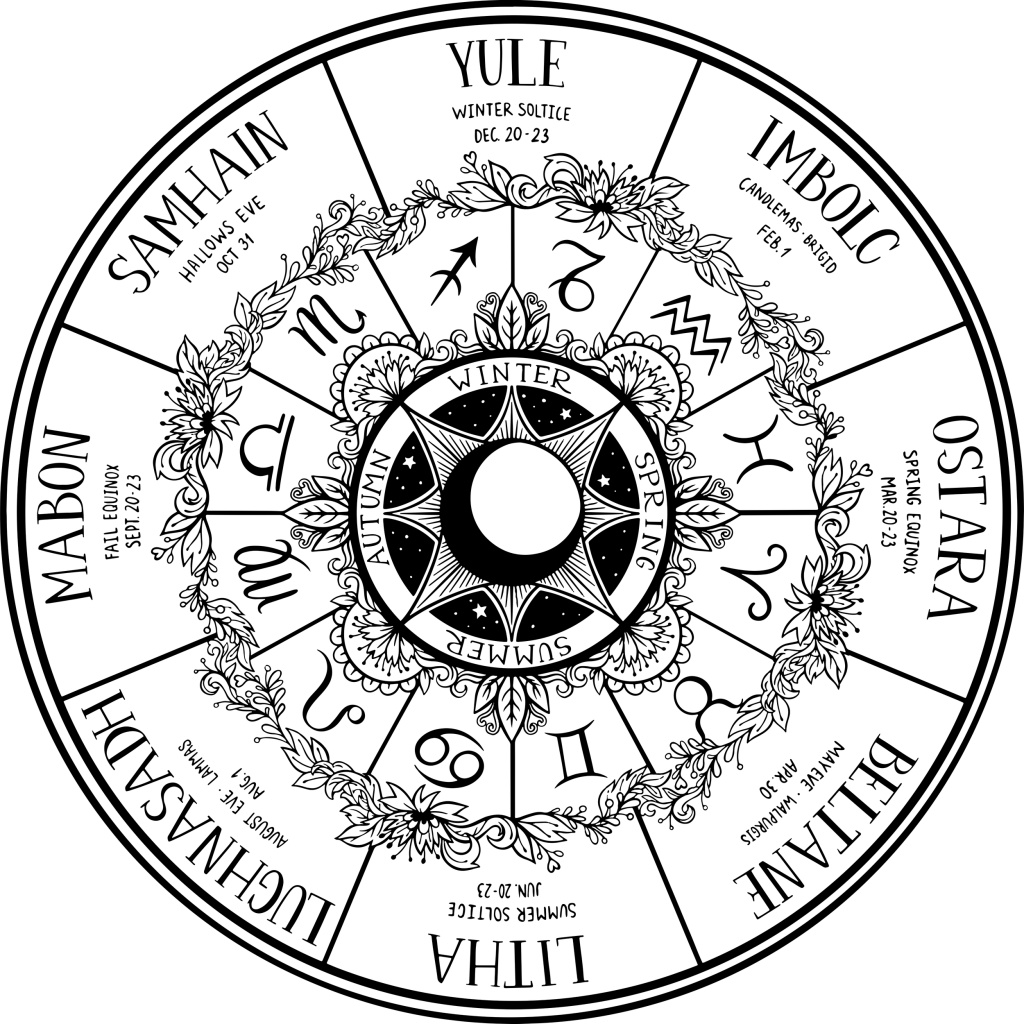
Rather than leaning into theatricality or performance, Sammie and the farm’s founders, Kate and Molly, are careful to keep these gatherings grounded in the natural world around them. The celebrations centre on seasonal food, local produce and shared experience, creating events that feel both meaningful and accessible. Sammie describes them as “unashamedly joyful and moving” occasions that bring together people of all ages and backgrounds, with no prior expertise or special knowledge required.
For Sammie, these moments of shared ritual aren’t about performance, nostalgia or reenactment. They’re about re-rooting modern lives in something older and steadier. In a world that often feels fragmented and fast, gathering around a fire, listening to a story or sharing food made from wild ingredients becomes a way of remembering that we are part of something much larger than ourselves.
These gatherings simply ask for presence, curiosity and an open mind – and most importantly a willingness to step outside for a while. She often hears people remark afterwards how unexpectedly powerful the experience was, and how they hadn’t realised how much they were craving a return to seasonal rhythm and shared tradition – filling a space they didn’t know was there until they found it.
In Sammie’s words
For someone curious about foraging or plant-based knowledge, but unsure where to start, what would you suggest as a first step?
“There is a huge wealth of information out there. There are incredible books such as Food For Free by Richard Mabey and The Forager’s Handbook by Miles Irving. But there is nothing like learning in person – and the best place to find a forager near you is the Directory for the Association of Foragers, which covers the whole of the UK.”
What’s one small daily practice you’d suggest for someone wanting to reconnect with nature?
“A ‘sit spot’ is a wonderful practice. It is simply a place in nature that you return to regularly observe the changing seasons. Keep it close to home so you can visit as much as possible in all weathers and all seasons.”
Do you think children understand the natural world in ways adults often forget, and how do you nurture that instinct?
“I have two little ones, and I can say from experience that most children have an innate connection with nature. They are completely unencumbered by the reservations adults often have about harvesting and tasting wild foods. Anecdotally, children also make the best mushroom foragers – they’re closer to the ground and have sharp young eyes! At Four Acre Farm, we have hosted events where children harvest herbs and fruit and then make cordial on an open fire. The unbridled joy that they achieve from this is a privilege to watch, it feels like witnessing real-life magic.”
What do you hope people carry away from your walks and gatherings?
“My favourite moments are when someone realises a plant they thought was ‘just a weed’ is actually abundant, useful and growing in their own back garden.”
What do you see as the future of foraging and plant-based knowledge in modern life?
“I have worried about the future of foraging, with the decline of wild spaces, the reliance on AI and our increasingly fast-paced, digital lives. But I also believe these challenges are exactly why foraging will continue to flourish. Now more than ever, we need to gather to experience nature face to face and heart to heart.”
Finding our way back
Since meeting Sammie, I’ve found myself walking more slowly, looking more closely, and wondering what might be growing at my feet. The landscapes we move through every day are far from empty; they are layered with stories, sustenance and quiet wisdom, waiting for someone to notice.
Sammie’s work doesn’t ask us to abandon modern life, live on wild food and exist bare foot in the woods, (although she jokingly remarks that this sounds like heaven to her). Instead, it offers something gentler and more profound: reconnection. A way of stepping back into relationship with the land, the seasons and each other – one plant, one story and one shared moment at a time.
And there is something we can all learn from that.

 Life of Becky