The Green Gram as a Microcosmic Village
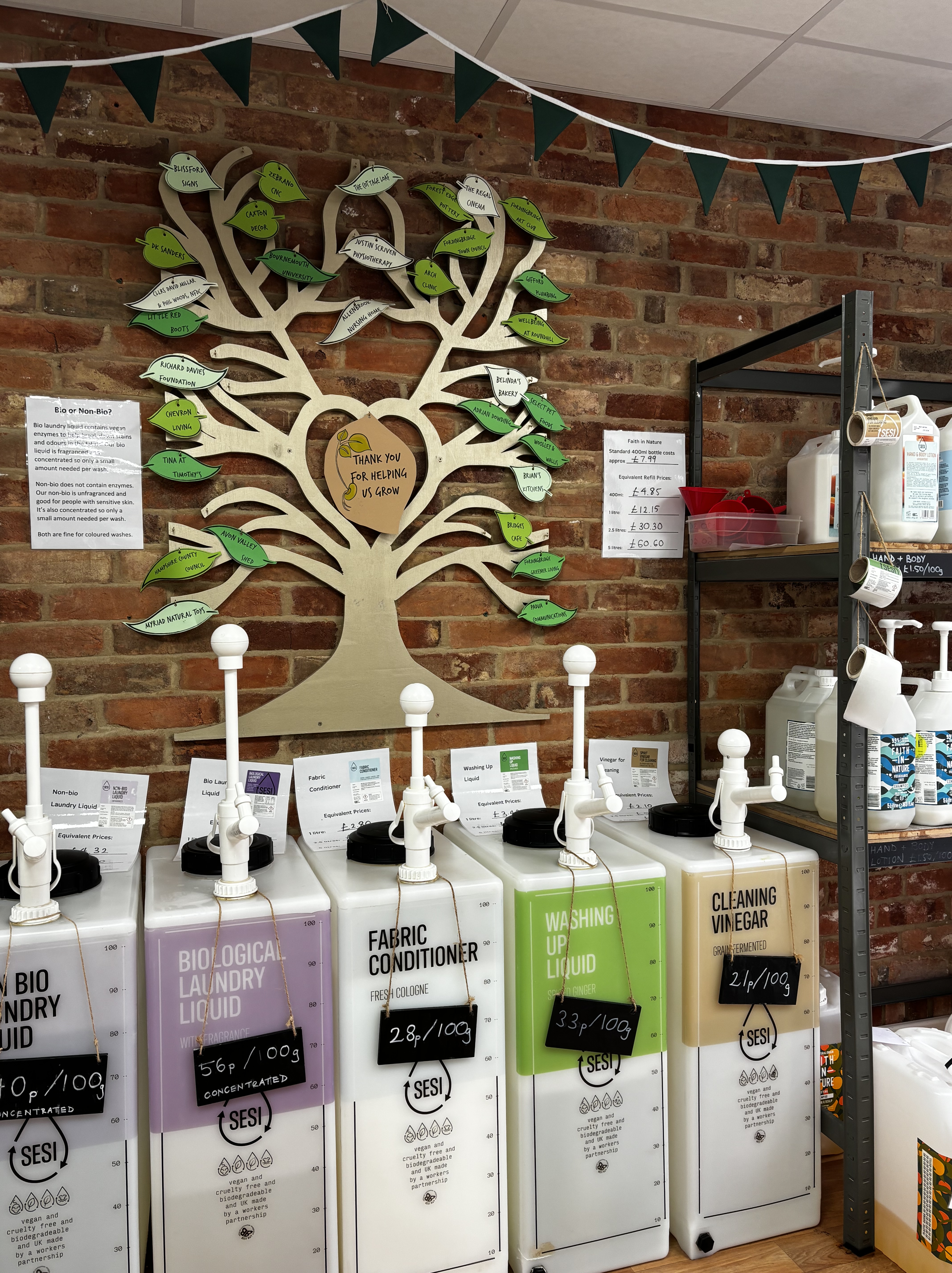
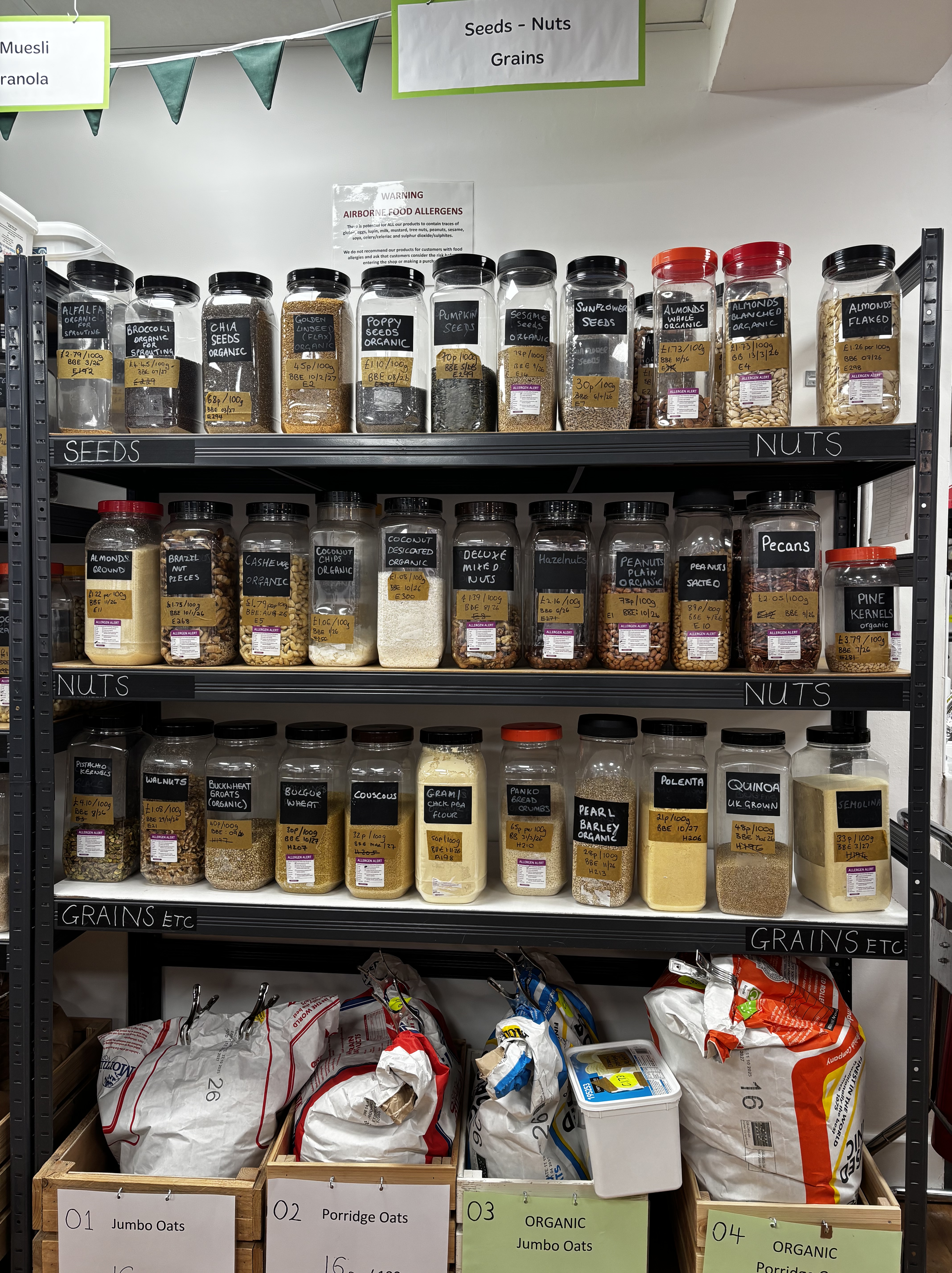
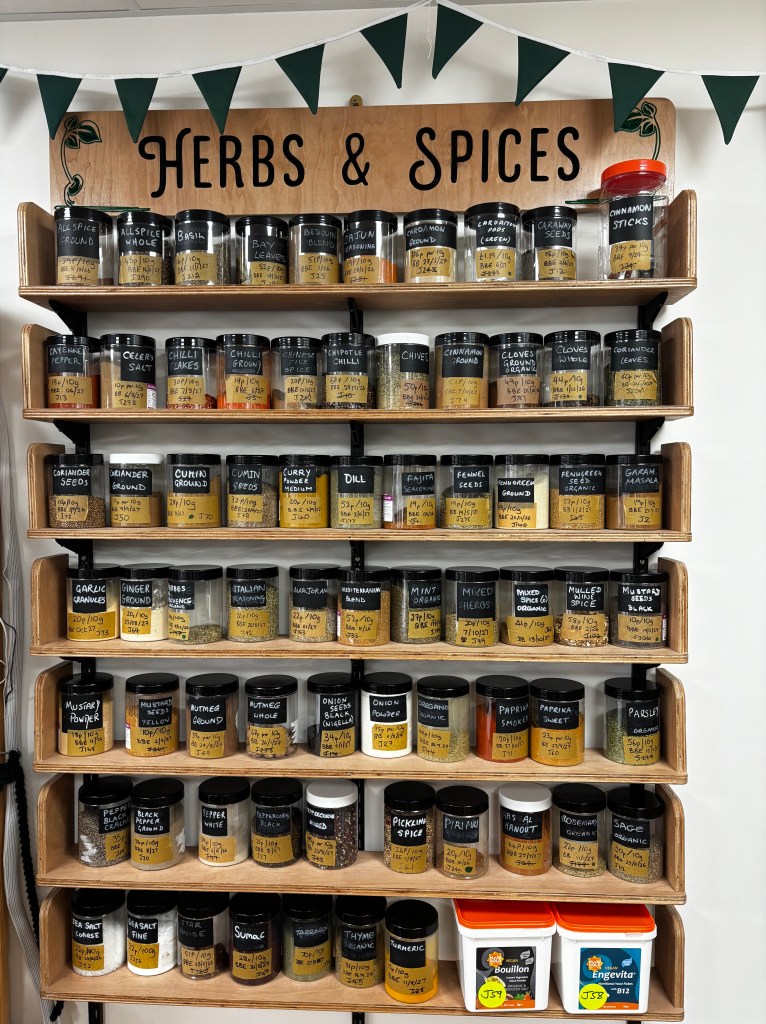
Volunteering at The Green Gram in Fordingbridge feels a bit like stepping back to something simpler. The shelves are lined with neatly labelled jars: rice, lentils, pasta and flour, and there’s a soft rhythm to the place: the chime of the door, the quiet chatter, the clink of glass as someone refills their container.
The Green Gram began in 2019 when Jo Anderson started a small mobile refill trailer in Alderholt. With support from the Plunkett Foundation, a local steering committee and a group of committed residents, the idea grew into something bigger. In 2022, after a successful crowdfunding campaign and months of community effort, The Green Gram opened its doors in Fordingbridge as a Community Benefit Society, meaning it belongs not to one person but to everyone who helps sustain it. Although the shop is powered largely by volunteers, the people you meet behind the counter, it is supported by a small number of paid staff who help manage the wider operational work. Together, they keep the shop running smoothly and ensure that plastic-free, ethical shopping remains simple and affordable for the whole community. But as I’ve learned since volunteering here, it’s about more than cutting waste. It’s about the people, the small conversations, shared recipes, and everyday kindness that make this little shop feel like a village.
What if a Shop Could Be a Village?
Fordingbridge is a small town, and like many small towns, it has only a handful of places that bring people together. A café or two, a pub, the high street. The Green Gram fills a different kind of gap. It becomes a social space within the walls of a shop, a place people visit not just for ingredients, but for interaction.
We often talk about sustainability in terms of carbon and plastic, and yes, The Green Gram has saved a remarkable amount of packaging waste since opening. Since May 2022, it has prevented over 2.5 tonnes of plastic from entering the waste stream, the equivalent of 117,574 plastic containers. But the most sustainable thing it offers feels less measurable. It is the sense of connection. Volunteering here is not just an environmental act, it is a social one.
Here, the pace slows down. Conversations linger. People scoop, weigh and chat rather than rushing in and out. Jo always hoped it would become a place “where like-minded people could share ideas and make connections,” and that vision feels quietly realised every day. The beauty of The Green Gram is that it offers more than practical ingredients. You find yourself swapping recipes, hearing what someone is cooking for dinner, or listening to stories about grandchildren and gardening plans. As Jo explains, some customers “have little opportunity for social interaction and really appreciate being able to have a conversation,” while others arrive with children who head straight for the small play area at the front of the shop. It is a space that welcomes all ages and walks of life, creating moments of belonging that feel just as important as the jars of rice and lentils lining the shelves.

The People Behind the Counter
Every volunteer brings something different to the shop. A unique rhythm or way of interacting with customers. One thing The Green Gram is certainly not lacking is personality and character. It runs on more than just practical help. It runs on people and their stories. Teachers, retirees, students and parents each give a few hours of their time to keep this small ecosystem alive. It is a space that quietly proves that everyone, in some way, has something to offer.
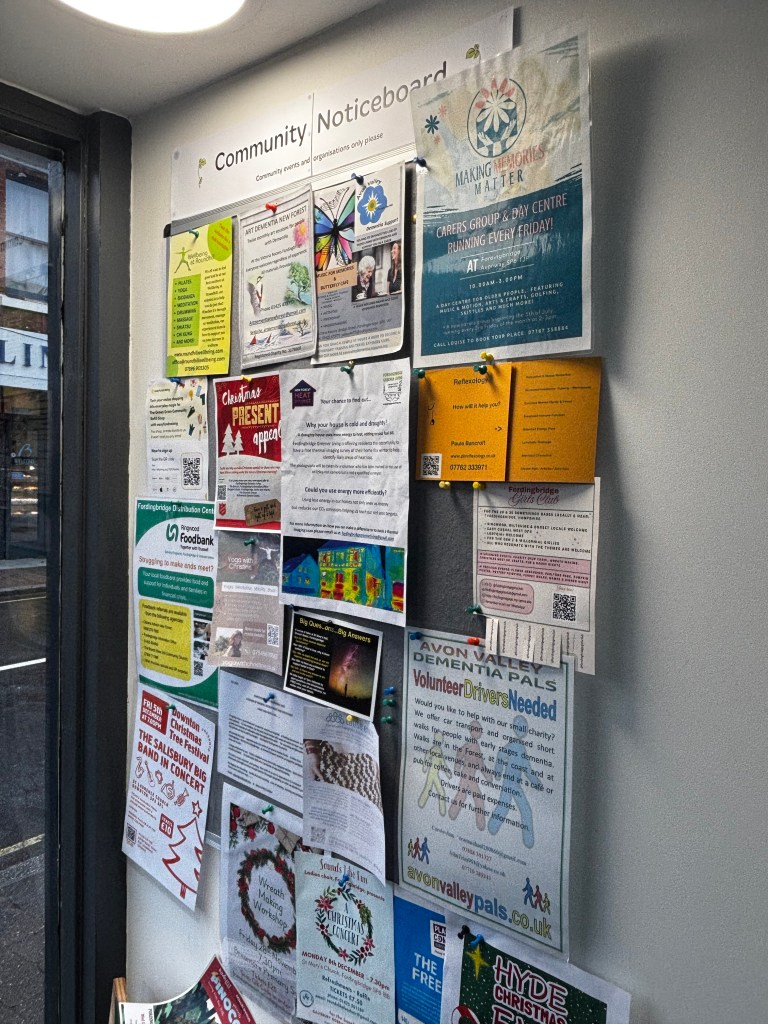
It also would not be what it is today without the support of the wider local community. Avon Valley Shed helped retrofit both shop premises, while The Branch, as Jo explains, “enabled us to reach out to low-income families with holiday activities for the kids.” Alongside, the United Reformed Church who also donated essential equipment to help the shop grow. The Green Gram’s Outreach Co-ordinator Wendy works closely with local organisations, giving talks to residents at Kings Court and offering visits for scouting groups with children as young as four, introducing them early to the ideas of reuse, care and community. In this way, The Green Gram feels like a true expression of village life. Local businesses, groups and individuals supporting one another at a time when high streets need it most, each playing their part in keeping something meaningful alive.


The People Who Come Through the Door
Customers come and go, but they stay connected through the shared rhythm of the shop. Someone comes in for ingredients for a cake, someone else donates old jars, a newcomer asks how best to cook mung beans. I haven’t been volunteering for long, but you quickly start to recognise faces. The man who always forgets his jars. The mother who lets her children choose chocolates for an afternoon treat. The woman who refills the same peanut butter jar each week. Each interaction feels small, but together they form the Green Gram experience. A loop of kindness, all weighed and measured like the products themselves.
When I asked Jo how she would describe the shop to someone who had never been in, she said it was “friendly, fun, welcoming, encouraging and often bustling.” She acknowledges that the experience might feel slightly overwhelming at first but reminds customers that “all of our volunteers are happy to answer any questions and have a chat about how things work.” Part of the beauty of the shop is that you only buy what you need, reducing both food and plastic waste. And there is no pressure to commit. As the committee explains, “there is no requirement to commit to a whole bottle or container.” Instead, visitors are encouraged to explore and experiment, trying different spices, grains or snacks in small quantities. By simplifying the way people buy whole-food ingredients and encouraging the reuse of containers people already have at home, the team hopes The Green Gram can inspire younger generations. “Our aim is to encourage good choices and help form good habits for life,” they say, raising awareness around single-use packaging, food waste and unnecessary chemicals. The shop quietly reminds us that sustainability does not have to be complicated. Often, meaningful change is built through simple, everyday habits.

Why We Keep Coming Back
Volunteering is something I tended to associate with retirement, but it shouldn’t be. It feels good to do good, to give time and energy without expecting anything in return. But the secret is: you do get something back. You get the joy of slowing down. The chance to meet people you might never have crossed paths with. The stories that unfold while you’re refilling jars of rice. As one of the younger volunteers, I work alongside people 30 or 40 years older than me, people who’ve had entire careers, raised families, travelled, lived full lives. Listening to them is like opening a different kind of jar: full of stories, wisdom, perspective. I also volunteer often with my mum, which makes it extra special to me. It’s time we spend doing something together, rather than simply existing alongside one another in our busy routines.
In its own gentle way, The Green Gram restores faith in the idea of a village. It reminds us that it is the small, uncelebrated acts of care that hold communities together, and that change doesn’t always need to be big to matter. By the end of a shift, the shop settles into a soft calm. The afternoon light catches the jars, turning lentils gold and sugar softly pale. You hang up your apron, hear the familiar bell as a customer leaves, and realise how rare this kind of space has become. For some, a visit to The Green Gram lasts ten minutes. For volunteers, it’s two or three hours. But either way, it leaves its mark, on the day, on your mindset, perhaps even on how you look at the world beyond the shop door. As I step outside and the bell rings behind me, my shift is over for now, but I already know I’ll return. After all, there is a village to keep building.

 Life of Becky