Why books feel harder than ever — and why that might be exactly the reason to pick one up.
Nobody reads anymore. Or at least that’s how it feels. In a world of swipes, scrolls, and clicks, turning a page isn’t part of most people’s daily routines – mine included. Ironically, our idea of ‘reading’ now often comes filtered through Instagram: a creator’s morning pages, ten neatly photographed sheets of journalling, proof that they’ve read their ‘ten pages’. And that’s not to say this is true for everyone – far from it. But if your feed, like mine, is full of wellness creators and curated routines, it’s easy to start seeing reading through that same filtered lens. Gone are the days of me studying and admiring Hardy and du Maurier with a pencil and a broken spine – but there’s a quiet nostalgia for the joy that great literature can bring. And yet, for many of us, reading is less a habit and more an aspiration, it is something we believe we should do but rarely make the time for.
Reading in an Age of Distraction
But it’s not just a feeling – and in many ways, it’s not even our fault that we struggle to read. A lot of the difficulty lies in our attention span: the length of time we can sustain our focus, and our ability to stay with something when it doesn’t offer instant reward.
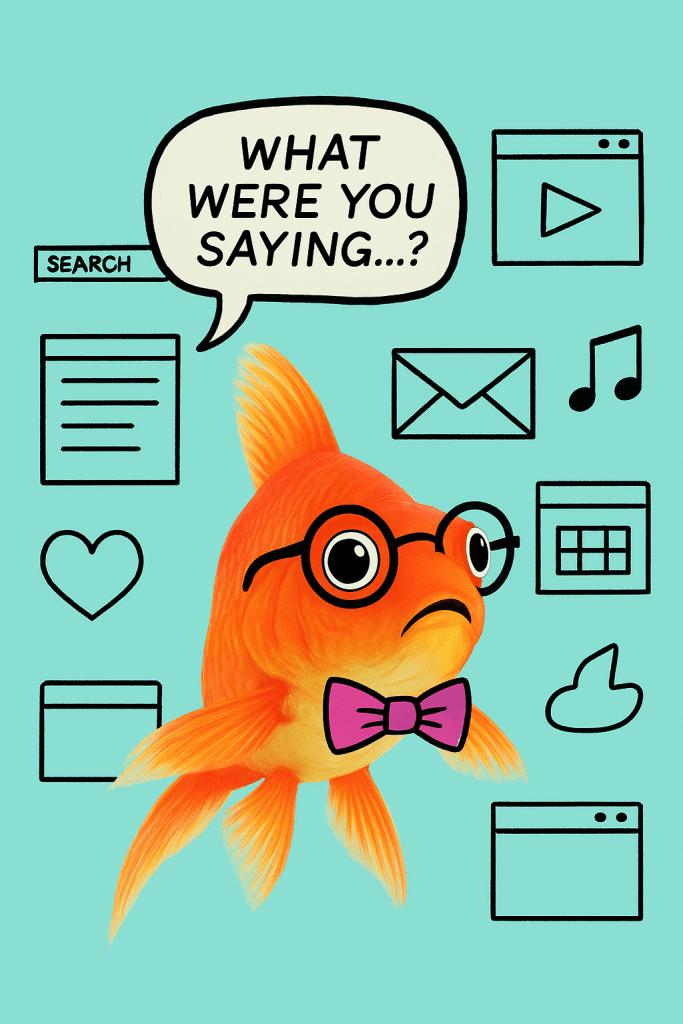
A decade ago, a viral Time article claimed that humans now have a shorter attention span than a goldfish — at just eight seconds. While that particular figure is widely disputed, there is growing evidence that our attention is being stretched thin. Gloria Mark, a professor at UC Irvine and a leading expert on digital distraction, found that the average person switches tasks on their computer every 47 seconds – even when they’re trying to work. And short-form video platforms like TikTok and Instagram Reels? Studies suggest they don’t just distract us — they reshape our brain’s reward systems. The rapid pace, the unpredictable content, the promise of something new with every swipe: it’s a perfect recipe for triggering dopamine spikes, training our brains to chase novelty and quick hits of stimulation.
There’s a comfort in that format. You know that in 20 or 30 seconds, you’ll be entertained, and you can put it down at any moment with no real consequence. It’s low-effort, low-commitment, and highly effective at soothing us in moments of boredom, stress, or overstimulation. But over time, it becomes harder to reach for anything that doesn’t offer that instant gratification. Reading requires the opposite: presence, stillness, and delayed reward.
The plot thickens (pardon the pun), when it comes to media multitasking – using multiple screens or flitting between apps. A study published in the Journal of Experimental Psychology: Human Perception and Performance found that this kind of multitasking is associated with poorer sustained attention, especially among younger adults (and even more so in those who’ve grown up with screens from the start). We train our brains to expect novelty, with a new stimulus every few seconds – and books, with their slow-burn stories and quiet, steady unfolding, simply don’t offer that kind of fix. So, whilst we may want to read, our attention has been rewired to chase instant stimulation. And it’s hard to sink into Hardy or du Maurier when your brain is used to dopamine on demand.
And then there’s the pressure to read for the wrong reasons. With the rise of BookTok and hyper-curated reading aesthetics, even something as gentle and nourishing as reading can start to feel… performative. Aesthetic. Another thing to tick off the to-do list in pursuit of productivity or self-improvement. But people don’t want to feel like they have to read. The moment it becomes a measure of success or discipline, it stops feeling restful. Something that can be deeply therapeutic turns into yet another way to be productive.

Reclaiming Reading for joy and as an act of resistance
So, it’s not surprising we struggle. Reading today isn’t just a challenge of time, it’s a challenge of rewiring our attention, and reclaiming our reasons for reading. But it doesn’t have to be 50 books a year, or the Booker Prize winner. It just has to be something that brings you joy. Something that makes you feel curious, or rested, or alive in a way that scrolling never quite does. Start with a book that excites you – however short, silly, or simple it may seem. Let go of comparison, of reading targets, of the pressure to be always reading what’s trending. There are plenty of niches for everyone, and there is no gold medal for the thickest spine on your shelf.
In a world that is loud, reactive, and always rushing, books offer something deeper – and often teach us something important. They let your brain stay with something, long enough to think about it even after the page is closed. I don’t know about you, but I can’t say that about an Instagram reel.
And it doesn’t have to be a daily thing either – not if that’s not how you prefer to read. In a recent episode of the podcast On Purpose by Jay Shetty, he discusses with Emma Watson how they don’t necessarily read every day, but instead carve out longer, focused blocks of time – a few dedicated hours once or twice a week. This way, they can fully immerse themselves in a book or piece of learning. And while we can’t all think like Emma Watson (unfortunately!), it’s a helpful reminder that reading and learning can look different for everybody. It doesn’t have to follow one rigid model.
If a few pages before bed isn’t your rhythm, that’s okay. Personally, I’m the same – I’d rather spend an hour or two lost in a story, uninterrupted, really being with the text. The important thing is finding that works for you and honouring that without guilt or comparison.
Let’s make it a habit
There is a kind of quiet power in choosing attention and intention over distraction. What a funny world, where reading feels almost rock ‘n’ roll. In a world built to splinter our focus, picking up a book becomes almost radical. As James Clear writes in his book, Atomic Habits,
“Every action you take is a vote for the type of person you wish to become. No single instance will transform your beliefs, but as the votes build up, so does the evidence of your new identity. This is one reason why meaningful change does not require radical change. Small habits can make a meaningful difference by providing evidence of a new identity. And if a change is meaningful, is it actually big. That’s the paradox of making small improvements.”
His book is a brilliant starting point for anyone looking to build (or stick to) small, meaningful habits – and whilst that’s a whole topic, it’s a helpful lens for approaching reading too. If reading is hard now, start small. Make it easy and visible.
And no – this isn’t a post to say I’ve mastered it. These are words of encouragement for you and for me. It is a reminder that is okay to begin again and discover something you perhaps used to love. I always feel better, and distinctly centred and grounded after reading – so I urge you to also chase this feeling. Read for pleasure, not performance – step away from the noise (just for a second) and let yourself slow down.
If you want to delve in deeper
📖 Gloria Mark (2023)
Attention Span: A Groundbreaking Way to Restore Balance, Happiness and Productivity
🔗 gloriamark.com
🔔 Ralph et al. (2015)
“Media Multitasking and Sustained Attention”
🔗 Read article
📘 James Clear (2018)
Atomic Habits: An Easy & Proven Way to Build Good Habits & Break Bad Ones
🔗 jamesclear.com/atomic-habits
🎙️ On Purpose with Jay Shetty (2025)
“Emma Watson EXCLUSIVE: The Story She Has Not Shared Until Now”
🔗 Listen on Spotify
🕵️♀️ Additional Articles:
– Why You Can’t Focus Anymore – Time Magazine (2023)
– Are Attention Spans Actually Decreasing? – Brain Mind Society
- Feature photo by Ugur Akdemir on Unsplash
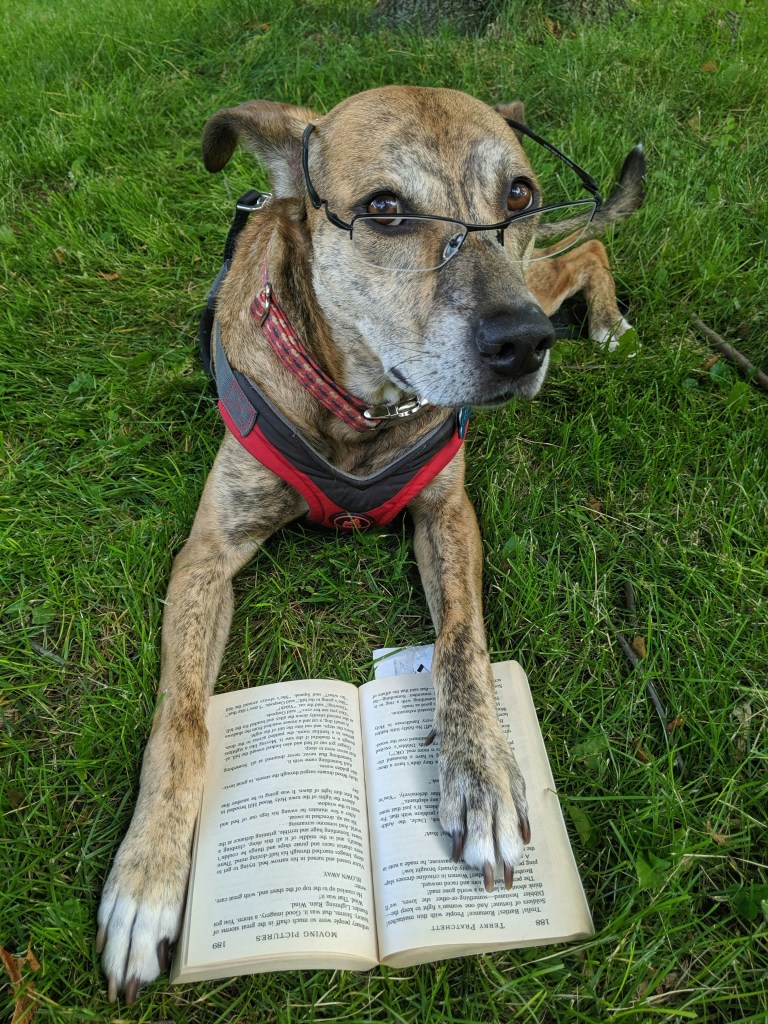
- Dog photo by Josh Rakower on Unsplash

 Life of Becky